
Digital marketing in 2025 is driven by intent, integration, and measurable outcomes. As online channels become increasingly competitive, businesses can no longer rely on isolated tactics or short-term experimentation. Simply running advertisements, publishing blogs, or maintaining social media profiles does not guarantee growth. What delivers consistent results today are well-planned digital marketing strategies aligned with customer behavior, trust signals, and long-term business goals.
This blog explains the digital marketing strategies that work in 2025, focusing on real business pain points, competitive insights, and execution frameworks that help brands grow sustainably rather than temporarily.
Table of Contents
The Digital Marketing Landscape in 2025
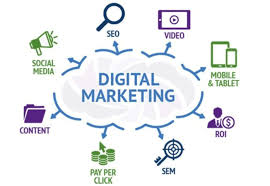
digital marketing strategies
The digital ecosystem has matured significantly over the last few years. Most businesses now have access to similar platforms, automation tools, analytics software, and advertising networks. However, results differ drastically because execution and strategic clarity vary.
Several trends define digital marketing in 2025. Advertising platforms have become more competitive, leading to higher cost per click and cost per lead. Organic reach on social media continues to decline, forcing brands to rethink engagement and distribution. AI-generated content has flooded search engines, increasing competition and reducing tolerance for low-quality material. At the same time, privacy regulations have limited third-party tracking, making attribution more complex.
These changes require digital marketing strategies that prioritize relevance, authority, and conversion instead of visibility alone.
Business Pain Points Driving New Digital Marketing Strategies
Rising Customer Acquisition Costs
One of the most pressing challenges for businesses is the rising cost of acquiring customers. Increased competition on paid platforms has driven up advertising costs across nearly every industry. Many companies attempt to solve this problem by increasing budgets, but this often leads to diminishing returns rather than sustainable growth.
Effective digital marketing strategies in 2025 focus on balancing paid acquisition with organic visibility, improving conversion rates, and increasing customer lifetime value. This approach allows businesses to grow without becoming overly dependent on advertising spend.
This means things start looking better after you have had a success but now the aim is to feel that high again and again, the work for same multiplies.
Low-Intent Traffic and Poor Lead Quality
Another common issue is attracting traffic or leads that do not convert. This usually happens when marketing efforts prioritize volume instead of intent. Broad targeting attracts users who may be curious but are not ready to make a purchase decision.
Modern digital marketing strategies emphasize attracting users who are actively searching for solutions, services, or comparisons. This results in higher-quality leads, shorter sales cycles, and more predictable revenue outcomes.
For easier and efficient work landscape, you can consider Adobe
Content Saturation and Declining Engagement
Content production has accelerated due to AI tools, but differentiation has become increasingly difficult. Many blogs, videos, and social posts now cover identical topics with minimal originality, making it harder to rank or capture attention.
To compete effectively, digital marketing strategies must focus on depth, experience, and real-world insight. Content must demonstrate understanding, not just information, to earn trust from both users and search engines.
Strategy 1: Intent-Driven SEO as a Core Digital Marketing Strategy
Search engine optimization remains one of the most effective digital marketing strategies in 2025, but its execution has evolved significantly.
Traditional SEO approaches focus on high-volume keywords. While these keywords may generate traffic, they often attract users in early research stages, leading to low engagement and weak conversion rates. Ranking alone is no longer enough.
Intent-driven SEO focuses on understanding why users search and aligning content accordingly. This includes targeting problem-based queries, solution-focused searches, service keywords, and comparison terms. Competitors who dominate search results invest in comprehensive service pages, industry-specific content, and strong internal linking structures that build topical authority over time.
Strategy 2: Performance Marketing Built Around Profitability
Paid advertising remains essential, but performance marketing in 2025 is no longer about visibility alone. Profitability has become the primary metric.
Many businesses still treat performance marketing as a traffic-generation activity. Campaigns are optimized for clicks or leads without evaluating lead quality, funnel leakage, or lifetime value. This approach often inflates numbers without improving revenue.
High-performing digital marketing strategies use funnel-based advertising systems. Ads are aligned with landing pages, retargeting sequences, and follow-up communication through email or messaging platforms. Competitors who scale successfully track profitability at each stage instead of increasing budgets without optimization.
Digital marketing uses online channels like social media, search engines, email, and websites to promote products/services, leveraging data for personalized engagement, broader reach, and measurable results compared to traditional methods, encompassing strategies like SEO, content marketing, PPC, and influencer outreach to connect with customers where they spend their time.
Digital marketing involves using websites, mobile devices, social media, and search engines to promote products and services, offering an additional approach compared to traditional marketing methods.
Since the 1990s, digital marketing channels have evolved, including key platforms like email, social media, and pay-per-click advertising. Each requires strategic planning to effectively reach target audiences.
Key digital marketing strategies include website marketing, content creation, email campaigns, social media, affiliate marketing, and the emerging trend of video and text message marketing.
Marketers face challenges such as the rapid proliferation of digital channels, the need for effective data analysis, and capturing consumer attention amid digital distractions.
Successful digital marketers need strong communication skills, proficiency in data analytics, and a solid understanding of social media dynamics to effectively craft compelling marketing narratives.
Strategy 3: Content Marketing as an Authority-Building Strategy
Content marketing continues to be a central pillar of digital marketing strategies, but its purpose has shifted.
AI tools have increased content volume across the internet, making originality and expertise essential for visibility. Search engines increasingly reward content that demonstrates experience, depth, and usefulness rather than repetition.
Successful competitors publish fewer but more comprehensive pieces. These articles address real business problems, include practical examples, and offer actionable insights. This approach builds authority, improves rankings, and supports long-term trust.
Strategy 4: Short-Form Video Integrated Into the Marketing Funnel
Short-form video remains highly effective in 2025, but only when integrated into broader digital marketing strategies.
Many brands achieve high reach without seeing meaningful business impact because videos lack direction. Without a clear objective or call to action, visibility rarely converts into leads or sales.
Effective digital marketing strategies use short-form video to educate, build credibility, and guide users toward the next step in the journey. Leading competitors repurpose video content across platforms and measure performance beyond basic engagement metrics.
Strategy 5: Email and Messaging for Retention and Growth
Owned channels such as email and messaging platforms have become increasingly important in 2025.
Reliance on third-party platforms exposes businesses to algorithm changes and rising costs. Owned channels provide stability and enable consistent communication with audiences.
High-performing brands segment users based on behavior, automate follow-ups, and focus on delivering value before promoting offers. These digital marketing strategies improve engagement, retention, and overall customer lifetime value.
Strategy 6: Trust-Based Digital Marketing Strategies
Trust plays a decisive role in modern purchasing decisions.
Consumers are more cautious and research-driven than ever. Reviews, testimonials, case studies, and social proof significantly influence conversion rates.
Effective digital marketing strategies integrate trust signals across the entire customer journey. This includes verified reviews, transparent messaging, detailed case studies, and consistent brand positioning across all digital touchpoints.
Strategy 7: Data-Driven Optimization for Long-Term Success
Data-driven decision-making is essential for sustainable growth.
Businesses that rely on assumptions often waste budgets and miss optimization opportunities. Without accurate tracking, it becomes impossible to identify what is working.
Successful digital marketing strategies track the complete customer journey, measure micro and macro conversions, and refine campaigns based on insights. Competitors who scale consistently treat analytics as a strategic tool rather than a reporting obligation.
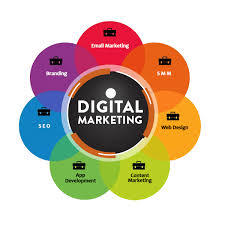
How Top Competitors Structure Digital Marketing in 2025
Across industries, leading competitors follow similar principles. They maintain clear niche positioning, integrate SEO, content, paid media, and automation, and prioritize intent and trust over volume. Continuous testing and refinement are embedded into their systems.
They view digital marketing strategies as interconnected frameworks rather than isolated activities.
What Is Internet Marketing?
Technically, internet marketing is marketing that takes place solely on the internet. As such, it is a subset of digital marketing, which can use many different kinds of digital platforms, including the internet, to reach its desired audience.
How Can You Become a Digital Marketer?
Digital marketers need strong writing and social media skills, along with a good understanding of data analytics. A bachelor’s degree is required for most digital marketing positions. You might also want to take digital marketing courses or participate in a digital “boot camp.” In addition, completing an internship while in school can be useful.2 A master’s degree in digital marketing may be useful but is not considered essential.
Affiliate Marketing
Affiliate marketing is one of the oldest forms of marketing, and the digital world has given it new life. In affiliate marketing, companies and individual “influencers” promote another company’s products and get a commission every time a sale is made or a fresh lead is added to their list. Many well-known companies, including Amazon, have affiliate programs that pay out millions of dollars to affiliates that help sell their products.
Video Marketing
A lot of internet users turn to sites like YouTube before making a buying decision, to learn how to do something, to read a review, or just to relax. Marketers can use any of several video marketing platforms, including Facebook Videos, Instagram, and TikTok, to run a video marketing campaign. Companies find the most success with video by integrating it with SEO, content marketing, and broader social media marketing campaigns.
Text Messaging
Companies use text messages (SMS) to share news about products and promotions. Nonprofit organizations and political candidates also use texting to promote themselves and solicit donations. Today many marketing campaigns make it possible for consumers to make a payment or donation via a simple text message.
Website Marketing
Companies often use their own website as the centerpiece of their digital marketing activities. The most effective websites represent the brand and its products and services in a clear and memorable way. A website today must be fast-loading, mobile-friendly, and easy to navigate.
Pay-Per-Click Advertising
Pay-per-click (PPC) advertising enables marketers to reach audiences on news and other websites and digital platforms through paid ads. Marketers can set up PPC campaigns on Google, Bing, LinkedIn, X (formerly Twitter), Pinterest, and Facebook and show their ads to people searching terms related to their products or services.
These campaigns can segment users based on their demographic characteristics (such as age or gender), or their particular interests or location. The most widely used services for PPC are Google Ads and Facebook Ads.
Conclusion
Digital marketing strategies that work in 2025 are built on relevance, depth, and accountability. Businesses that focus on intent-driven SEO, profitability-focused advertising, authority-based content, trust-building initiatives, owned audience growth, and data-backed optimization are best positioned for long-term success.
As competition intensifies and consumer behavior evolves, brands that invest in structured, integrated digital marketing strategies will continue to grow well beyond 2025.
For more such content click here.